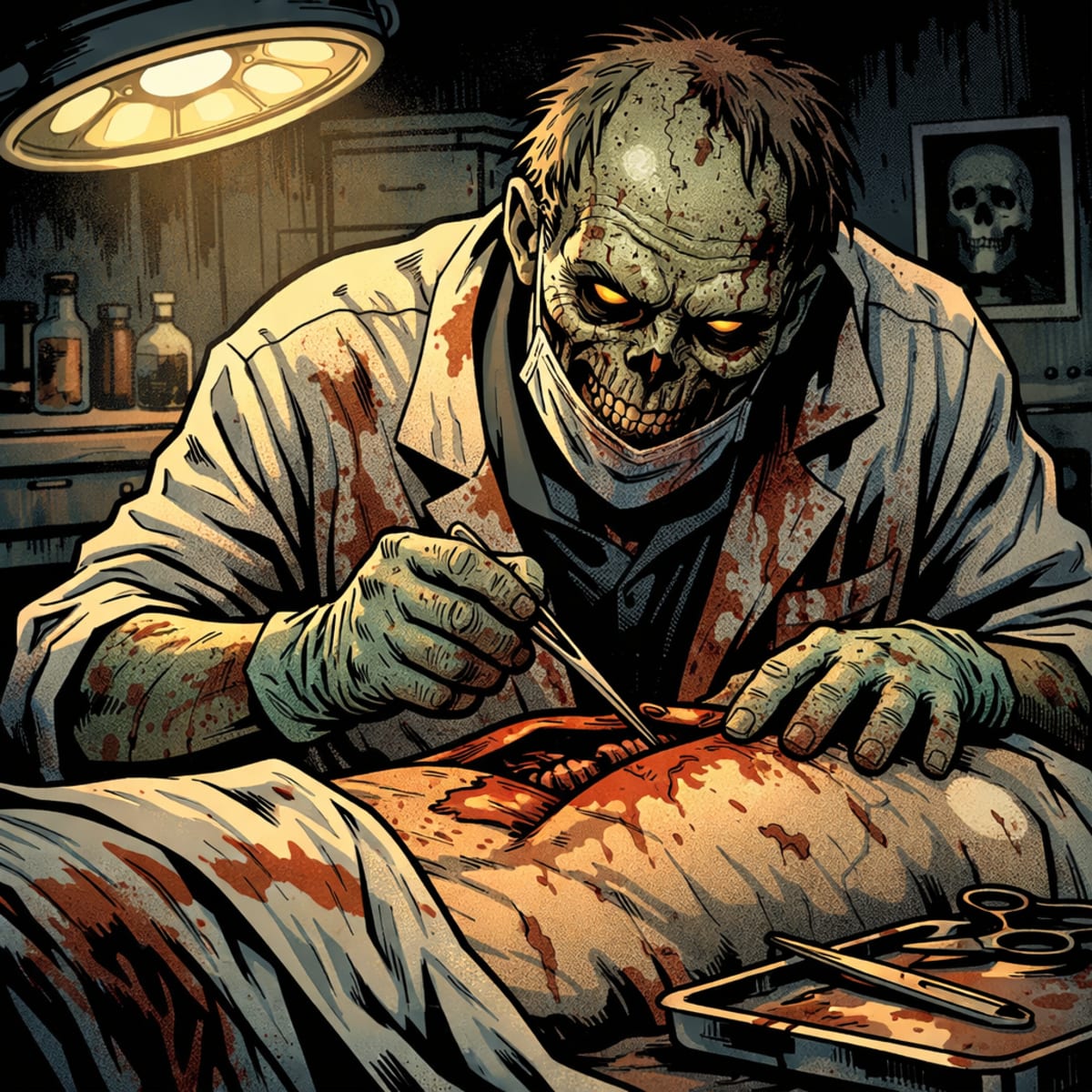
Well, I got punched in the face.
If you read my previous post about The 30-Day Draft challenge, you’ll know that The Witching was the novel I set out to write. The challenge started in September, and, well… it’s December.
That said, this was still the fastest turnaround in which I’ve ever produced a novel--and my longest one to date--so I’m ultimately happy with the outcome. But instead of glossing over the missed deadline, I want to take a closer look at what went right, what went wrong, and what I’ll do differently next time.
What Went Right
This was the first novel where I fully committed to plotting--from the core premise all the way down to individual chapters. That meant front-loading most of my research, testing character voices early, and balancing the story from beginning to end before drafting ever began.
Normally, my process is a blend of loose plotting and free-writing. I usually know the general direction of a scene, but not enough to see more than a few feet ahead as I write. With The Witching, however, I already understood the world, the characters, and the narrative alignment before I started. That alone saved me time, frustration, and a lot of wasted words.
Having a fully developed plot ahead of time was an excellent experience, and it’s a process I plan to carry forward into future projects.
With the pressure of the time constraint (and even after I realized I wouldn’t technically “win” the challenge), it helped push me past my daily word-count comfort zone. While I didn’t hit the required average to finish on schedule, I did stack multiple days well beyond my previous personal records. And surprisingly, it wasn’t as difficult as I expected--I mostly just had to get out of my own way.
What Went Wrong
The first thing that knocked me off track was getting sick. A few lost days might not sound like much, but once momentum breaks, regaining it can feel like a losing battle. Writing resistance grows fast, and pushing past it becomes a herculean effort.
That’s life--but I did let the delay stretch longer than it needed to. What eventually worked was lowering the barrier to entry: I told myself I’d write for ten minutes and could quit if it wasn’t happening. Most of the time, once I started, I kept going. Writing is a muscle--you just have to get in the reps.
Another issue was the nature of The Witching itself. It was not only longer than my previous work, but also far more serious in tone. There were no quick action scenes to sprint through or monster reveals to lean on. This was a slower, more introspective, psychological horror story that required patience and restraint.
If I attempt this challenge again (and I plan to), I’ll likely choose a different type of story for it.
Finally, I underestimated the workload created by Dreadful Delights launching during the same window. Final edits, formatting, publishing, marketing, and promotional posts all competed for time and energy while I was still drafting. I didn’t properly account for how much overlap there would be.
Going forward, if I have a release scheduled within the same 30-day period, I’ll need to adjust the writing plan accordingly--either by increasing word-count days early or committing to a faster, rougher draft than originally intended.
Final Thoughts
Despite missing the original goal, the challenge was absolutely worth it. I pushed myself out of my comfort zone, discovered new craft methods I’ll continue using, exceeded my previous word-count limits, and gained a much clearer understanding of what to prepare for next time.
Hopefully, there’s something here that helps you too--whether you’re tackling a draft challenge of your own or just trying to write more consistently.
As always, happy reading!